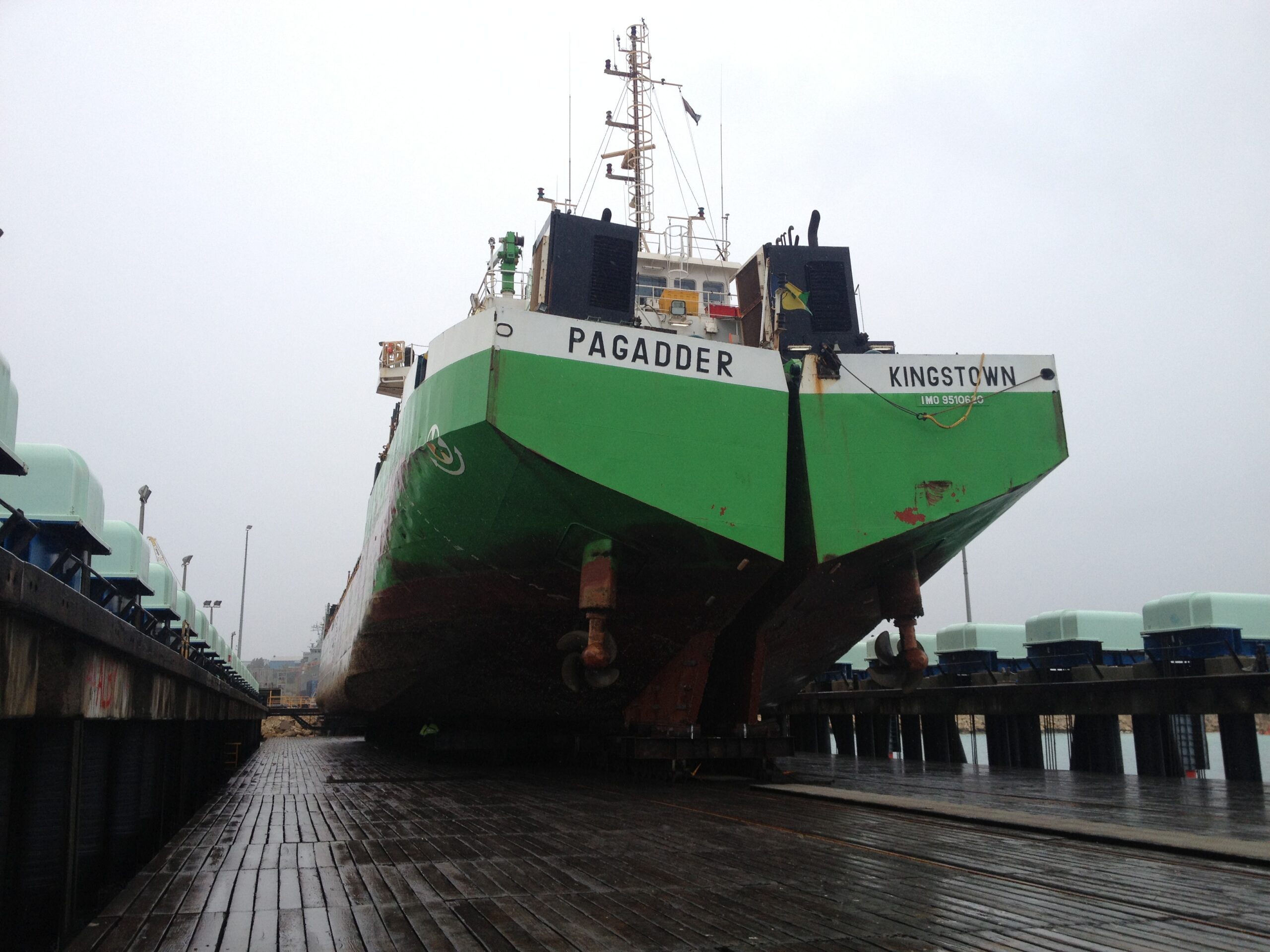
Operational Sequence: From Lift Platform to Repair Berth
A ship lift transfer system is ultimately measured by its ability to move vessels safely, efficiently, and repeatedly from the waterfront to their designated work locations. While the process may appear straightforward from a distance, each transfer operation involves a carefully controlled sequence of actions designed to maintain vessel stability, ensure proper load distribution, and minimize operational risk.
Understanding the operational sequence shows how the transfer system’s components work together as a coordinated engineering system.
Step 1: Vessel Arrival and Positioning
The process begins when the vessel enters the ship lift dock and is positioned above the lifting platform.
Accurate positioning is essential because the lift platform support arrangement must align with the vessel’s structural load-carrying elements. Depending on the facility, positioning may be assisted by:
- Mooring systems
- Positioning guides
- Tug assistance
- Laser alignment systems
- Camera monitoring systems
The objective is to place the vessel in the correct location before lifting operations commence.
Step 2: Lifting the Vessel
Once properly positioned, the ship lift raises the vessel clear of the water.
During this phase, the lifting system must maintain synchronized movement across all hoists to prevent differential loading. As the vessel emerges from the water, buoyancy gradually decreases, and the full weight of the vessel transfers onto the lifting platform.
Engineers pay close attention to:
- Lift synchronization
- Platform levelness
- Structural deflection
- Hoist load balance
- Environmental conditions
The vessel is typically raised to an elevation that allows the transfer cars to be positioned beneath the support structure.
Step 3: Transfer Car Positioning
Before load transfer, the transfer cars must be accurately positioned beneath the vessel.
Depending on the transfer system design, this may involve:
- Longitudinal movement
- Transverse movement
- Automated vehicle positioning
- Manual alignment procedures
Each transfer car must align precisely with the predetermined support locations to ensure proper weight distribution.
Modern systems often use automated positioning technology that can achieve accuracy within a few millimeters.
Step 4: Load Transfer from Lift to Transfer Cars
The load transfer phase is one of the most critical stages of the entire operation.
The vessel’s weight is gradually shifted from the ship lift platform onto the transfer cars through a controlled transfer sequence. The objective is to achieve uniform load sharing while avoiding sudden changes in support conditions.
Key activities include:
- Controlled lowering of the platform
- Load monitoring
- Verification of support contact
- Load equalization checks
- Transfer car readiness confirmation
Operators continuously monitor system data to ensure that individual transfer cars remain within allowable load limits.
Step 5: Pre-Movement Verification
Before moving the vessel, operators typically conduct a comprehensive verification process.
Checks may include:
- Load balance confirmation
- Brake status verification
- Rail clearance inspection
- Communication system checks
- Route availability confirmation
- Environmental condition assessment
Modern facilities often use control-system interlocks that prevent movement unless all critical conditions are met.
This step provides the final opportunity to identify and correct abnormalities before transfer operations begin.
Step 6: Vessel Transfer Movement
The transfer cars begin moving along the rail network at a carefully controlled speed.
Although transfer speeds are relatively low, the movement requires constant coordination because enormous loads are being transported while maintaining strict alignment tolerances.
During movement, operators monitor:
- Vehicle position
- Speed
- Wheel loads
- Rail conditions
- Load sharing
- Equipment status
Operators accelerate and brake gradually to minimize dynamic loading and prevent excessive hull stresses.
Throughout the journey, multiple transfer cars act as a single synchronized system supporting the vessel.
Step 7: Navigation Through the Yard
Depending on the facility layout, the vessel may pass through several transfer pathways before reaching its destination.
Possible movements include:
- Longitudinal transfer from the lift
- Transverse distribution across the yard
- Directional changes through transfer tables
- Positioning on multiple work tracks
In large shipyards, vessel routing becomes a key operational planning activity because several vessels may move through the transfer network at the same time.
Efficient routing minimizes delays and maximizes yard throughput.
Step 8: Arrival at the Work Position
Upon reaching the designated repair or construction berth, the transfer system slows and positions the vessel at its final operating location.
Accurate positioning is critical because maintenance infrastructure may depend on the vessel being located within specific tolerances.
Positioning accuracy affects:
- Access equipment alignment
- Utility connections
- Crane clearances
- Worksite organization
- Safety zones
Modern systems frequently use automated positioning assistance to achieve highly repeatable placement.
Step 9: Load Transfer to Permanent Supports
Once correctly positioned, the vessel is transferred from the transfer cars onto permanent support arrangements.
These supports may include:
- Keel blocks
- Bilge blocks
- Cradle systems
- Specialized support structures
The transfer process must be performed gradually to avoid introducing excessive hull stresses.
As support contact is established, the vessel’s weight is progressively redistributed from the transfer cars onto the permanent berth structure.
Step 10: Final Inspection and Securing
Before maintenance or construction activities begin, the support arrangement is inspected and verified.
Typical checks include:
- Support contact verification
- Load distribution review
- Alignment measurements
- Stability assessment
- Safety inspections
Once approved, the vessel is considered secured and ready for shipyard operations.
The transfer cars are then released and returned to the transfer system for their next assignment.
Operational Challenges
Although the sequence appears linear, real-world transfer operations must account for numerous variables, including:
- Changing vessel conditions
- Uneven load distribution
- Weather effects
- Equipment maintenance requirements
- Rail settlement
- Operational scheduling constraints
Successful transfer operations depend on both engineering design and disciplined operating procedures working together.
Key Takeaway
A vessel transfer operation is a carefully controlled engineering process that begins with lifting the vessel from the water and ends with its secure placement at a work berth. Every stage, from load transfer and route navigation to final positioning, must be managed to maintain safe load distribution, protect the vessel structure, and ensure efficient shipyard operations.