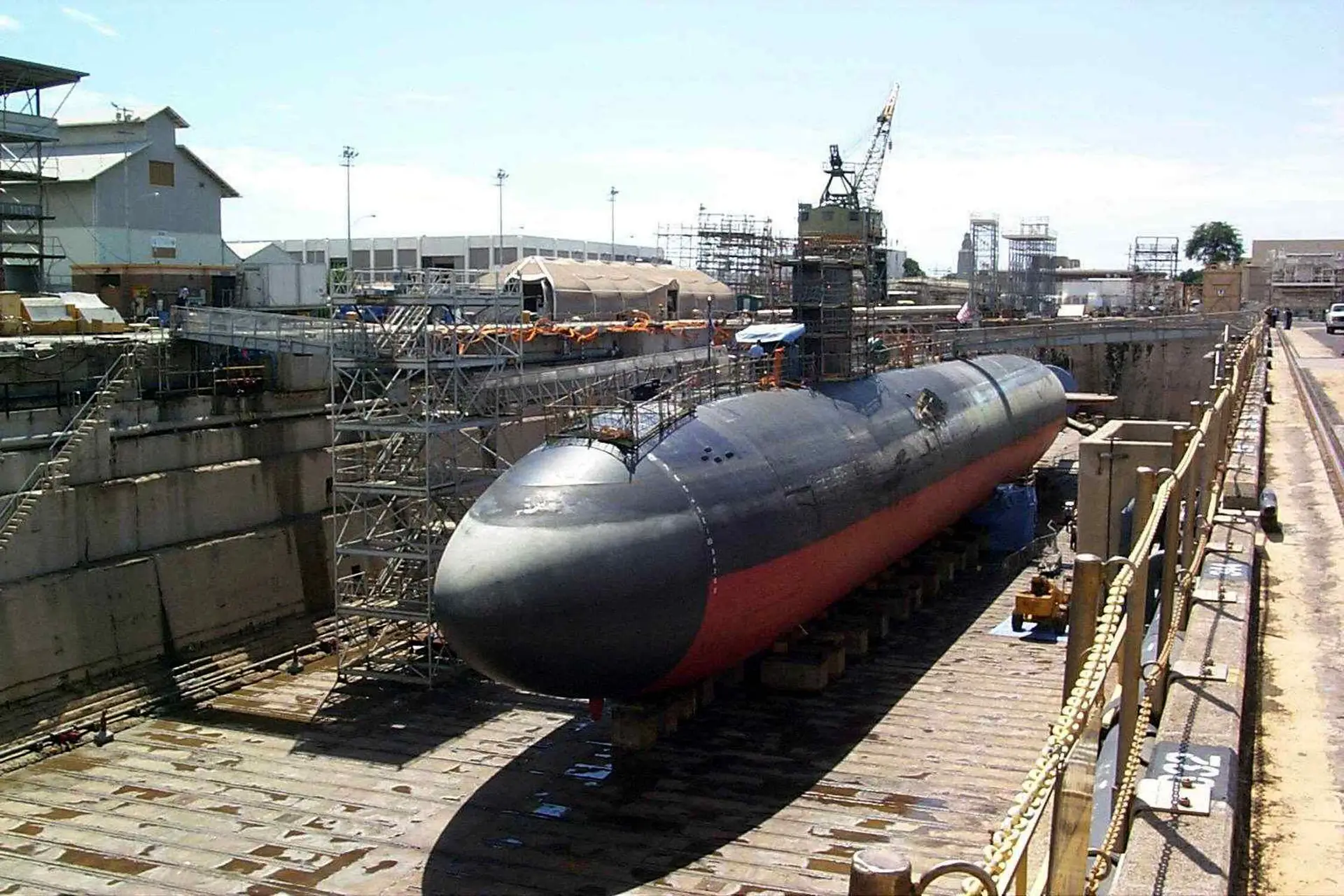
I dry-docked SSN Greenville on June 14, 2005, into the dry dock at Pearl Harbor
Graving Dry Docks: The Backbone of Modern Ship Repair and Maintenance
Graving dry docks are among the most widely used and versatile facilities in the maritime industry. From routine maintenance and inspections to major repairs, conversions, and vessel construction, they provide a controlled environment where ships can be safely removed from the water and supported for extended periods.
For dock masters, engineers, shipyard managers, and vessel operators, understanding graving dock design and operation is fundamental to modern dry-docking practice.
What Is a Graving Dry Dock
A graving dry dock is a permanent, excavated basin constructed onshore and fitted with a watertight entrance closure, commonly known as a caisson or dock gate.
Vessels enter the dock while it is flooded. Once positioned, the entrance is sealed and water is removed using pumping systems, allowing the vessel to settle onto its support arrangement.
Unlike floating docks, graving docks are fixed structures designed to handle a wide range of vessel sizes and operational requirements.
Graving docks play a critical role in the maritime industry by providing safe access to areas of a vessel that are normally submerged.
Typical activities include:
- Hull inspections
- Steel renewals
- Coating and blasting work
- Propeller repairs
- Rudder maintenance
- Mechanical upgrades
- Vessel conversions
- Regulatory surveys
Principal Components
While designs vary, most graving docks consist of several common elements.
Dock Structure
The dock floor and sidewalls form the primary structure and are designed to resist hydrostatic forces, soil pressures, and vessel support loads.
Entrance Closure
The dock entrance is sealed using a caisson, floating gate, or similar watertight barrier.
This closure allows the dock to be flooded for vessel entry and emptied for maintenance operations.
Pumping System
High-capacity pumping systems remove water from the dock after the vessel has been positioned.
The efficiency of these systems directly influences docking and undocking times.
Vessel Support System
Support arrangements typically include:
- Keel blocks
- Bilge blocks
- Side supports
- Special support structures
These supports transfer vessel loads safely into the dock structure.
How a Graving Dock Operates
Dock Preparation
Before vessel arrival, engineers and dock personnel prepare the support arrangement based on the docking plan.
Activities include:
- Setting keel blocks
- Positioning side supports
- Confirming elevations
- Verifying clearances
Vessel Entry
The dock is flooded and the vessel is maneuvered into position.
Accurate alignment is essential to ensure the vessel lands correctly on the support arrangement.
Dewatering
Once the entrance closure is secured, pumping operations begin.
As the water level decreases, the vessel gradually transfers from buoyant support to the keel blocks and side supports.
Maintenance Period
With the vessel fully supported, inspection, repair, construction, or conversion activities can proceed.
Undocking
Following completion of work, the dock is reflooded and the vessel is safely returned to service.
Engineering Considerations
Successful graving dock operations depend on careful engineering planning.
Key considerations include:
- Docking plans
- Keel block arrangements
- Load distribution
- Structural support locations
- Vessel stability
- Clearance verification
The most critical phase often occurs during landing, when vessel loads transition from water support to discrete support points.
Proper planning ensures these loads are transferred safely and predictably.
Advantages of Graving Dry Docks
Graving docks offer several important advantages.
High Capacity
They can accommodate a broad range of vessel sizes, including large commercial ships, naval vessels, and offshore structures.
Stable Working Environment
The fixed structure provides a reliable platform for major repair and construction activities.
Long-Term Durability
Properly maintained graving docks can remain in service for decades.
Operational Flexibility
They support inspections, repairs, conversions, new construction, and modernization projects.
Common Challenges
Despite their advantages, graving docks present several operational challenges.
These may include:
- Aging infrastructure
- Caisson maintenance
- Pumping system reliability
- Structural deterioration
- Vessel clearance constraints
- Increasing vessel size and displacement
Addressing these challenges often requires ongoing inspection, maintenance, and modernization efforts.
Modernization and Future Developments
Many graving docks around the world are being upgraded to meet evolving industry requirements.
Common modernization initiatives include:
- Structural rehabilitation
- Enhanced pumping systems
- Digital monitoring technology
- Improved support arrangements
- Automated control systems
- Expanded vessel capacity
These improvements help extend facility life while improving safety and operational efficiency.
Key Takeaway
Graving dry docks remain the foundation of modern ship repair and maintenance infrastructure. Their ability to provide a safe, controlled environment for inspection, repair, and construction makes them indispensable to the maritime industry.
Successful operation depends on sound engineering, proper planning, effective vessel support arrangements, and disciplined execution. For dock masters and engineers alike, understanding graving dock principles is essential to delivering safe and efficient dry-docking operations.